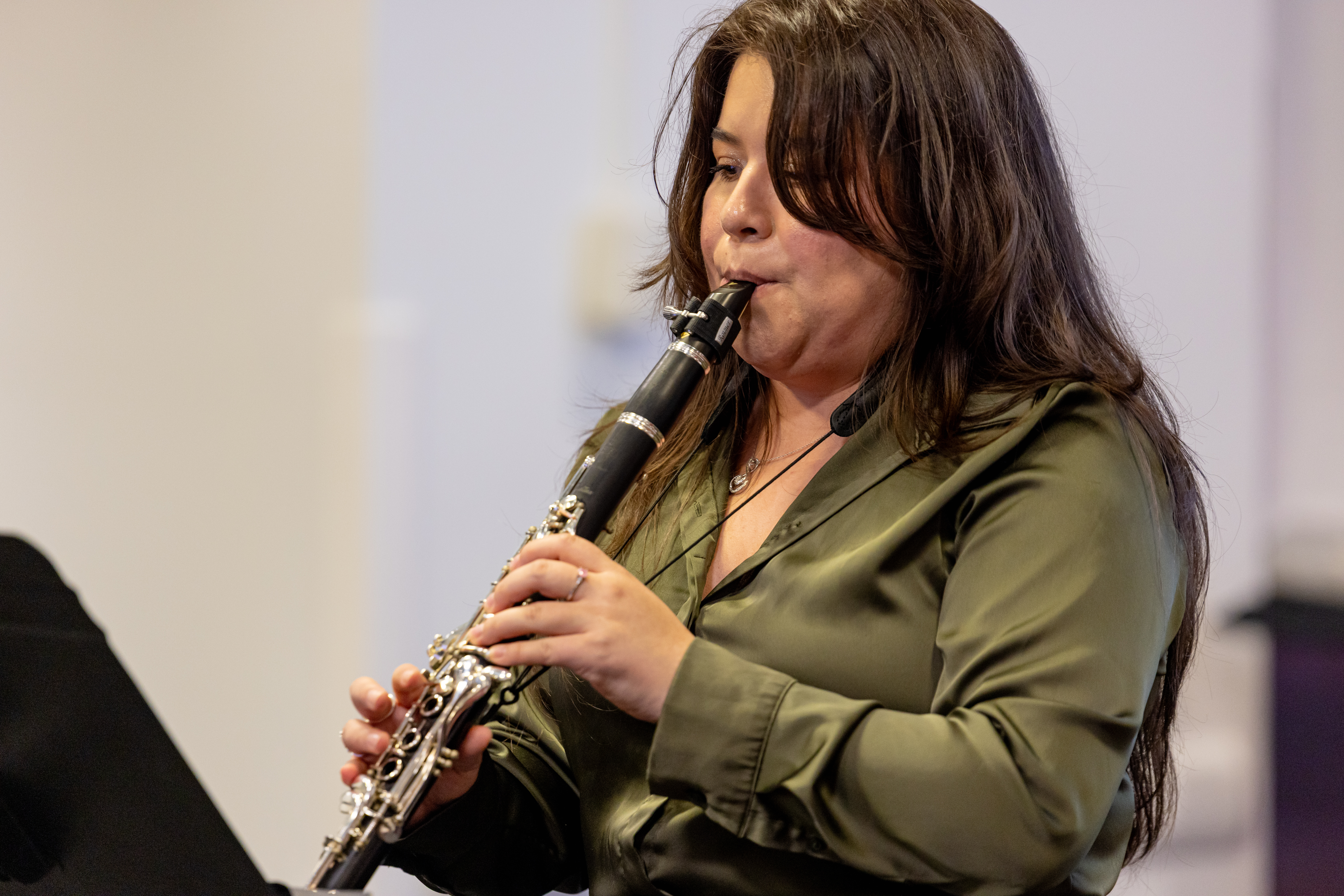
As clarinetists, we often concentrate so much on our repertoire that we sometimes race right through a warm-up and skip it. To me, that is like asking a runner to sprint without warming up or stretching. We are athletes as well. While we may not be lifting weights or running marathons, we do ask a lot of our bodies and need to allow them to wake up, align, and get ready for the demands of the physical and mental playing process. Although you may consider the playing of a clarinet a sedentary act, we do make demands of our small muscles — particularly in our hands, wrists and face — and like any other athlete, we need to condition, stretch, and protect our muscles every single day.
Before I even pick up my clarinet, I prefer to do a few minutes of dynamic stretching to get my shoulders, arms, and hands loose. Dynamic stretching helps me get rid of tension, increases blood flow to the areas needed and prepares me internally and mentally to engage with the clarinet. It really helps make the biggest difference while being only an incremental step, when I want to feel relaxed or grounded before starting to play. Here is a video tutorial of some of the dynamic stretches I use:
Why Warm-Up?
A proper warm-up is essential for:
- Preventing injuries like tendonitis, carpal tunnel, and repetitive strain
- Building and maintaining fundamentals
- Reinforcing consistent tone, technique, and control
- Creating mental focus before practicing and performing
How Long Should I Warm Up?
I typically recommend setting aside about 30 minutes for a comprehensive warm-up, but this can vary depending on your schedule, playing load, or current goals. The key is consistency, even a shorter warm-up done regularly will have lasting benefits.
What Should a Warm-Up Include?
Think of your warm-up as a gradual build-up, both physically and musically. I like to structure it in three parts:
- Air and Tone (Long Tones)
- Start with simple, slow long tones to center your sound and focus on breath support.
- Begin on the the lowest note on the clarinet, E, then move chromatically up the instrument to altissimo E.
- This should always be done with a metronome and tuner.
- Pay attention to resonance, smoothness, and pitch stability.
- Finger Technique (Scales & Arpeggios)
- Incorporate major and minor scales, full-range arpeggios, thirds, and chromatic scales.
- Use a metronome to maintain steady, even tempo.
- Keep your fingers close to the keys, relaxed and even.
- Articulation (Tongue Coordination)
- Once your air and fingers are settled, bring in articulation exercises.
- Try different speeds, lengths, and patterns of tonguing.
- Focus on clarity, flexibility, and matching the tone quality of your slurred playing.
This progression from air -> fingers -> tongue creates a logical path that sets up the body and mind for deeper musical work.
My Go-To Resource:
One of my favorite warm-up routines is Robert Spring’s. Robert Spring is an excellent clarinetist and pedagogue. His warm-up is a musical and structured combination of long tones, technical exercises and articulation exercises.
Robert Spring Clarinet Warm-Up
Final Thoughts
A warm-up is much more than a routine of mechanical fitness, it is your time to reconnect with the instrument, listen intently, and set the tone for the rest of your practice. Specifically, a warm-up is a way to take care of yourself and work on yourself as a clarinet player, which helps you grow, nurture your body, and stay connected to the fundamentals. A thoughtful warm-up can develop into a daily habit and later evolve into a ritual of clarity, focus, and intention.
 Marie Gallardo, clarinet
Leave a comment